
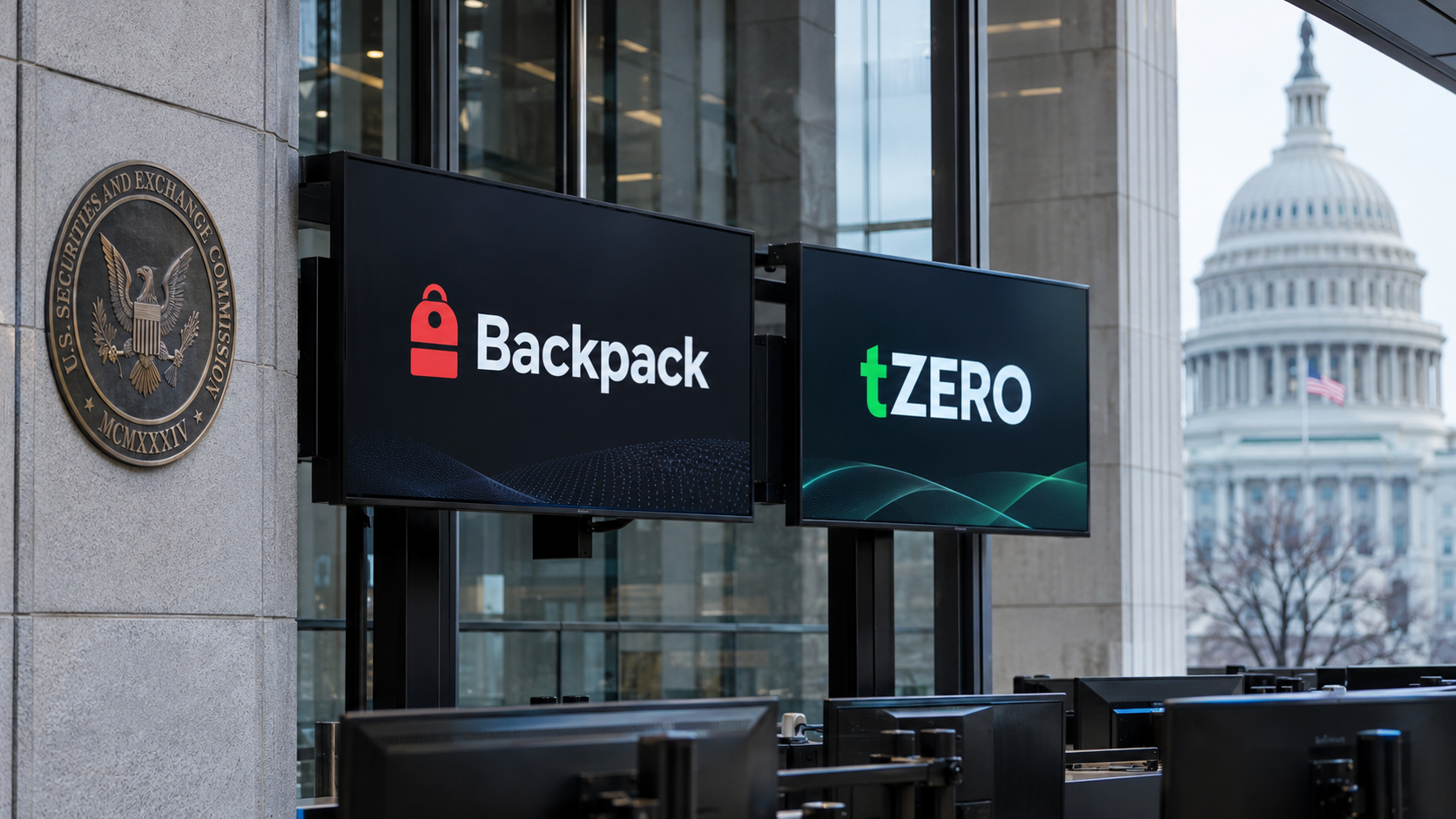
Washington, DC, USA, November 17, 2026 — The US Commodity Futures Trading Commission has approved applications connected to blockchain based derivatives trading infrastructure, clearing a regulatory milestone for companies seeking to bring traditional financial market functions onto distributed ledger systems.
Backpack and tZERO have been identified in industry reporting as recipients of approvals covering exchange and clearinghouse operations. The development follows comments from CFTC Chairman Michael Selig highlighting the agency’s approval of blockchain based market infrastructure.
Background
Derivatives markets traditionally rely on established exchanges, clearinghouses and financial intermediaries to facilitate trading and manage counterparty risk. Blockchain technology offers an alternative infrastructure through which transactions, records and settlement processes can be coordinated.
Crypto companies have increasingly sought regulatory recognition for platforms that combine digital asset technology with established financial market structures. However, operating such services in the United States requires compliance with applicable derivatives and clearing regulations.
Key Developments
The CFTC approvals cover applications associated with Backpack and tZERO, according to industry reporting. Backpack has been developing infrastructure designed to bring traditional financial market activity onchain, while tZERO operates in the digital securities and financial technology sector.
The approvals concern regulated derivatives exchange and clearinghouse functions. These are separate roles within the financial market structure, with exchanges facilitating trading and clearinghouses managing obligations between market participants.
The development is significant because it provides a regulatory pathway for blockchain based systems to participate in a market traditionally supported by conventional financial infrastructure.
The approvals do not mean that every blockchain based trading platform can operate without further regulatory requirements. Companies must still meet the applicable standards governing market operations, clearing, risk management and customer protections.
Industry Implications
The development could encourage additional financial technology firms to explore distributed ledger infrastructure for regulated derivatives markets.
Blockchain based systems may offer potential advantages in transaction recording, operational transparency and settlement coordination. However, these benefits will need to be demonstrated in live regulated environments, where reliability, liquidity and risk controls are essential.
The CFTC’s decision also adds to the broader debate about how US financial regulators should oversee digital asset businesses that perform functions traditionally associated with established exchanges and clearing institutions.
For the crypto industry, the approvals represent a step towards integrating blockchain infrastructure into regulated financial markets rather than limiting its use to digital asset trading platforms.
What’s Next
Market participants will be watching for further information about the operational launch of the approved platforms, the products they intend to list and the safeguards they will apply to customers and clearing operations.
The longer term significance will depend on whether blockchain based exchanges can attract institutional participation while meeting the operational and regulatory expectations of US derivatives markets.
